GUIDE TO TRANSPONDER KEYS

GUIDE TO TRANSPONDER KEYS

32 min read

32 min read

All You Need to Know About Transponder Keys

All You Need to Know About Transponder Keys

All You Need to Know About Transponder Keys

All You Need to Know About Transponder Keys

How transponder keys work, why we need them, how to spot them, the different types — And how to get a replacement, whether DIY or with help from a pro.

How transponder keys work, why we need them, how to spot them, the different types — And how to get a replacement, whether DIY or with help from a pro.

How transponder keys work, why we need them, how to spot them, the different types — And how to get a replacement, whether DIY or with help from a pro.

Paul Tyo 3D Avatar

By Paul Tyo

Lead Automotive Locksmith, CarKeyAction - Automotive Locksmith Calgary
transponder keys

Published on Jan 15, 2022 · Last updated on Feb 4, 2026

⚠️Warning: This article is actually informative

⚠️Warning: This article is actually informative

No time to scroll and read? Hit the TL;DR button and go straight to the final takeaways, conclusions, and all the "meat" — no fluff.

No time to scroll and read? Hit the TL;DR button and go straight to the final takeaways, conclusions, and all the "meat" — no fluff.

Transponders: What Are They, How They Look, How They Work

The Tiny Chip That Makes Your Car Harder to Steal

You’ve probably heard the term “chip key” thrown around before—well, that’s exactly what a transponder key is.

You’ve probably heard the term “chip key” thrown around before—well, that’s exactly what a transponder key is.

It’s a car key with a small chip built inside. It looks like a regular car key on the outside (a metal blade and a plastic bow). But inside, it hides a small chip called a transmitter (short for transmitter + responder) that does something pretty clever: it talks to your car.

It’s a car key with a small chip built inside. It looks like a regular car key on the outside (a metal blade and a plastic bow). But inside, it hides a small chip called a transmitter (short for transmitter + responder) that does something pretty clever: it talks to your car.

Illustration of a transponder car key showing the internal compartment that holds the transponder chip

So here’s how it works: around the ignition, there’s a small ring that reads the chip inside the key. That ring is basically a coil called an antenna.

So here’s how it works: around the ignition, there’s a small ring that reads the chip inside the key. That ring is basically a coil called an antenna.

When you insert your car key and turn the ignition cylinder, this antenna powers the transponder (based on the same principal as wireless charging)—the transponder then sends a unique digital “password” to your vehicle.

When you insert your car key and turn the ignition cylinder, this antenna powers the transponder (based on the same principal as wireless charging)—the transponder then sends a unique digital “password” to your vehicle.

If the secret password matches to the car's password, MAGIC!✨ The engine starts. And if it doesn’t? Well, nothing happens.

If the secret password matches to the car's password, MAGIC!✨ The engine starts. And if it doesn’t? Well, nothing happens.

It’s like a secret handshake only your car and the key know.

It’s like a secret handshake only your car and the key know.

So… why do we need all this tech? Well, in the early 90s car theft was a massive problem. Most cars had no real security, so stealing one didn’t take much effort at all.

So… why do we need all this tech? Well, in the early 90s car theft was a massive problem. Most cars had no real security, so stealing one didn’t take much effort at all.

Insurance companies were losing a lot of money. They started pushing car manufacturers to make better security systems. Their pressure led car companies to take action, and that’s when transponder car keys and laser-cut inventions adopted to fight back.

Insurance companies were losing a lot of money. They started pushing car manufacturers to make better security systems. Their pressure led car companies to take action, and that’s when transponder car keys and laser-cut inventions adopted to fight back.

The beauty of a transponder key technology is that each transponder key is programmed to a specific car. So even if someone copies the key’s shape and turns the ignition, the car won’t start. Because now, not like before, the car has to receive the right electronic password.

The beauty of a transponder key technology is that each transponder key is programmed to a specific car. So even if someone copies the key’s shape and turns the ignition, the car won’t start. Because now, not like before, the car has to receive the right electronic password.

It’s a simple yet powerful layer of protection that’s been keeping vehicles safer for decades. This layer of authentication has proven to be a very effective deterrent and one of the biggest advancements in vehicle anti-theft systems.

It’s a simple yet powerful layer of protection that’s been keeping vehicles safer for decades. This layer of authentication has proven to be a very effective deterrent and one of the biggest advancements in vehicle anti-theft systems.

Now that we've covered the basics, I want to dive into how this car key actually works.

Now that we've covered the basics, I want to dive into how this car key actually works.

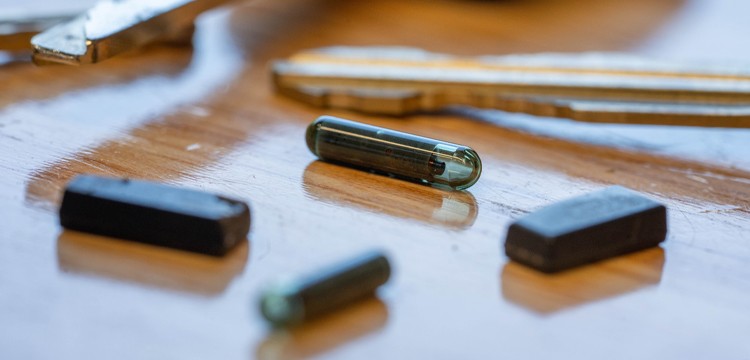
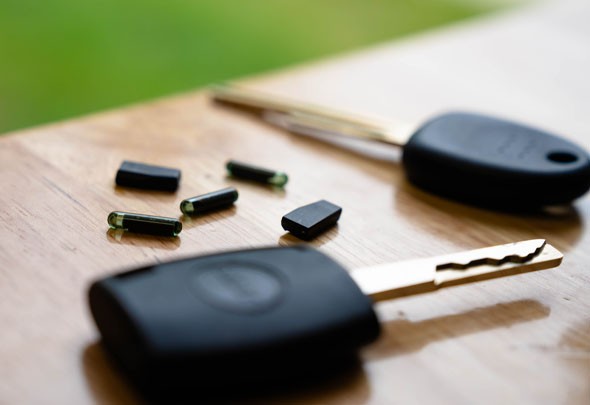
Close-up of car key transponder chips used for vehicle immobilizer systems

Close-up of car key transponder chips used for vehicle immobilizer systems

Close-up of car key transponder chips used for vehicle immobilizer systems

How Does a Transponder Car Key Work?
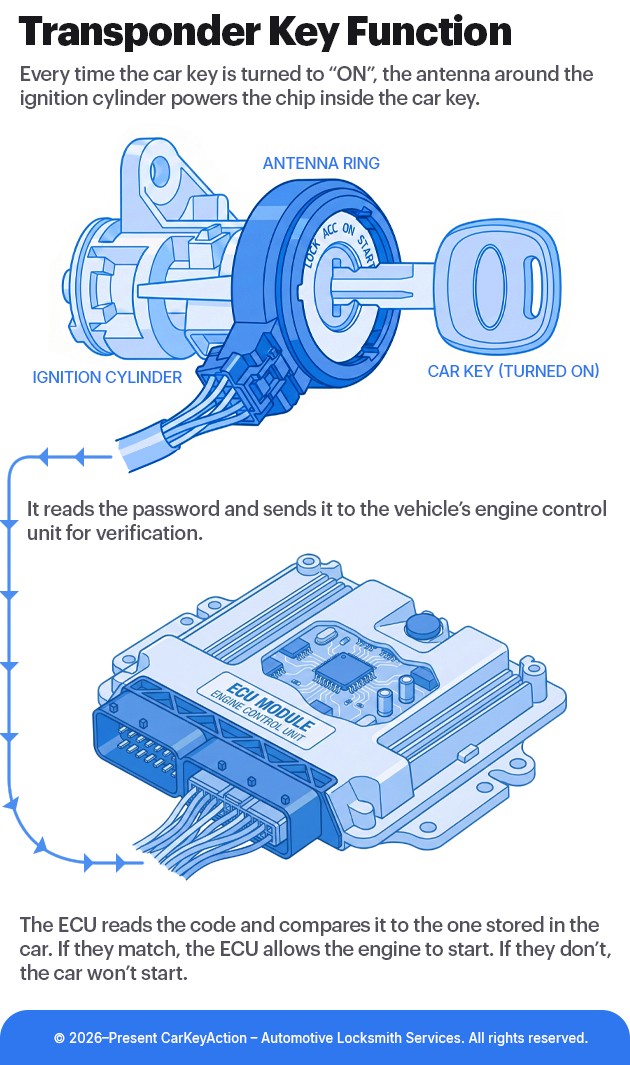
A transponder was designed to be a "sleeping computer"—a passive device that stays off until it’s activated.

A transponder was designed to be a "sleeping computer"—a passive device that stays off until it’s activated.

When you insert your car key into the ignition and then turn it, the antenna we talked about earlier sends out a signal that wakes up the chip. It's basically a low electromagnetic field that creates a current that powers up the transponder inside your key. Think of it like a wireless charger, same principle. You don’t see the charging process, but it happens.

When you insert your car key into the ignition and then turn it, the antenna we talked about earlier sends out a signal that wakes up the chip. It's basically a low electromagnetic field that creates a current that powers up the transponder inside your key. Think of it like a wireless charger, same principle. You don’t see the charging process, but it happens.

Once the transponder is powered, it wakes up and transmits a specific radio frequency signal that contains a secret digital code (your car’s unique password).

Once the transponder is powered, it wakes up and transmits a specific radio frequency signal that contains a secret digital code (your car’s unique password).

The vehicle's immobilizer system reads that code, and if it matches the one stored in its memory, the system allows the engine to start. If both codes don’t match or the signal isn’t received, the engine won't start.

The vehicle's immobilizer system reads that code, and if it matches the one stored in its memory, the system allows the engine to start. If both codes don’t match or the signal isn’t received, the engine won't start.

This setup adds a powerful layer of anti-theft protection. Without the correct chip inside the key that send the right password, even a perfectly cut blade won't start the car

This setup adds a powerful layer of anti-theft protection. Without the correct chip inside the key that send the right password, even a perfectly cut blade won't start the car

illustration antenna powers transponder reads and sends data

Transponders Aren't One-Type-Fits-All

It's important to understand that not all transponder chips are the same. Every car manufacturer has its own anti-theft system, and even within a single brand, different models or production years can use entirely different systems.

It's important to understand that not all transponder chips are the same. Every car manufacturer has its own anti-theft system, and even within a single brand, different models or production years can use entirely different systems.

For example: BMW 3-Series will have a different immobilizer system than an Audi A4 — so far pretty obvious, right? Now it gets more complicated: an Audi A4 and an Audi Q7 will also have different immobilizer systems. Still too obvious? How about this: an Audi A4 from 2015 has a completely different immobilizer setup than an Audi A4 from 2018. So even within the same model name, year-to-year changes can mean totally different immobilizer systems.

For example: BMW 3-Series will have a different immobilizer system than an Audi A4 — so far pretty obvious, right? Now it gets more complicated: an Audi A4 and an Audi Q7 will also have different immobilizer systems. Still too obvious? How about this: an Audi A4 from 2015 has a completely different immobilizer setup than an Audi A4 from 2018. So even within the same model name, year-to-year changes can mean totally different immobilizer systems.

But it gets even more complicated than that: some transponders are encrypted some are not, some are cloneable some are not, and some come "precoded" and some are not. We won’t go that deep into all that here, but it's good to know those things exist.

But it gets even more complicated than that: some transponders are encrypted some are not, some are cloneable some are not, and some come "precoded" and some are not. We won’t go that deep into all that here, but it's good to know those things exist.

Platform or system sharing is also possible and some manufacturers do that to some extent (for example: some VW and Audi immobilizer systems can still overlap). But in most cases, every anti-theft system is unique — meaning there is no universal transponder chip that will fit every vehicle.

Platform or system sharing is also possible and some manufacturers do that to some extent (for example: some VW and Audi immobilizer systems can still overlap). But in most cases, every anti-theft system is unique — meaning there is no universal transponder chip that will fit every vehicle.

Transponders Come in Different Shapes and Sizes

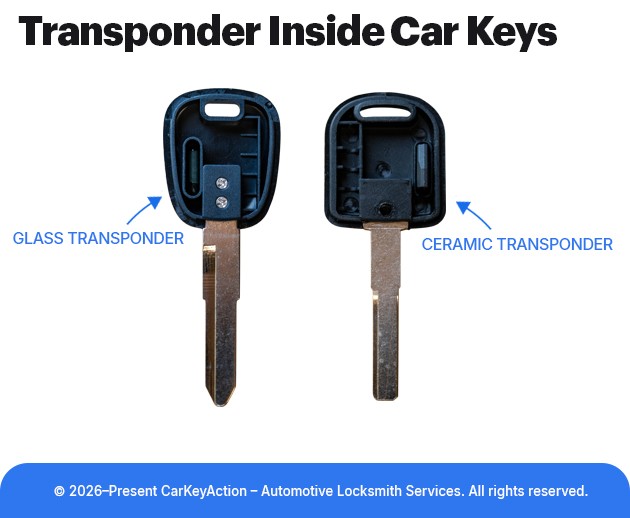
You’ll find transponder chips in two different casing: glass or ceramic. And both options can vary slightly in shape, size, and length from each other.

You’ll find transponder chips in two different casing: glass or ceramic. And both options can vary slightly in shape, size, and length from each other.

Glass transponders are more fragile and are usually used in older vehicles or simpler immobilizer systems. (drop one of those on a hard surface, and you'll probably be shopping for a new car key 😬)

Glass transponders are more fragile and are usually used in older vehicles or simpler immobilizer systems. (drop one of those on a hard surface, and you'll probably be shopping for a new car key 😬)

Ceramic transponders on the other hand, are more durable and are the standard in modern vehicles. They’re tougher, more heat-resistant, and handle rougher conditions better.

Ceramic transponders on the other hand, are more durable and are the standard in modern vehicles. They’re tougher, more heat-resistant, and handle rougher conditions better.

1

glass transponder

Glass Transponder

2

ceramic transponder

Ceramic Transponder

Illustration showing two car keys with internal transponder types labeled as glass transponder and ceramic transponder

Each transponder chip has a specific name identifier. Usually it’s referred to by a manufacturer name and a number like: Megamos ID48, Philips ID46, Texas 4C, etc.

Each transponder chip has a specific name identifier. Usually it’s referred to by a manufacturer name and a number like: Megamos ID48, Philips ID46, Texas 4C, etc.

You can’t reliably identify the chip’s type just by its outer shell. Two chips might look nearly identical but be completely different!

You can’t reliably identify the chip’s type just by its outer shell. Two chips might look nearly identical but be completely different!

For example: take Philips ID46 and Texas ID63 chips. They are both ceramic transponders, they might look identical but they are not. They use completely different encryption algorithms.

For example: take Philips ID46 and Texas ID63 chips. They are both ceramic transponders, they might look identical but they are not. They use completely different encryption algorithms.

Here's where it gets even more tricky: the same chip type can exist in either glass or ceramic form like the Texas 4C for example. For the car it makes no difference — the car only cares that it’s reading a valid 4C signal. But to the human eye, they look like two completely different chips and can mislead.

Here's where it gets even more tricky: the same chip type can exist in either glass or ceramic form like the Texas 4C for example. For the car it makes no difference — the car only cares that it’s reading a valid 4C signal. But to the human eye, they look like two completely different chips and can mislead.

As you can tell already, if we are dealing with just chips looks can be deceiving. Two transponders might look nearly identical on the outside but have completely different tech inside and each will fit completely different vehicles.

As you can tell already, if we are dealing with just chips looks can be deceiving. Two transponders might look nearly identical on the outside but have completely different tech inside and each will fit completely different vehicles.

How to Reliably Identify Transponder Chips
Let's say we know that the chip in front of us starts a specific car. We can look up online which chip type this vehicle accepts, and we will be on the money.

Let's say we know that the chip in front of us starts a specific car. We can look up online which chip type this vehicle accepts, and we will be on the money.

But what if we don’t know the origin of the chip?

But what if we don’t know the origin of the chip?

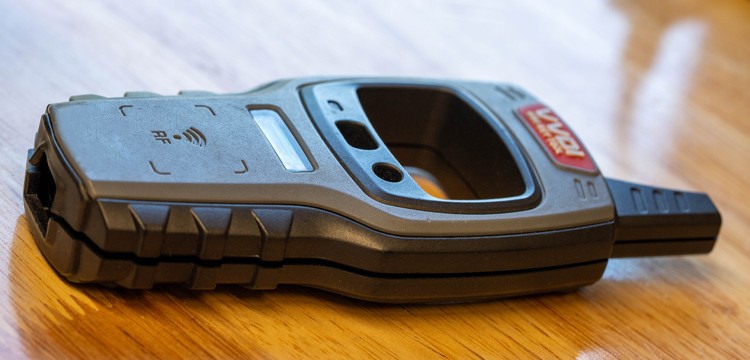
The most reliable way to identify a transponder chip would be by using a chip reader — it's a special tool that knows how to read chips and identify them and it’s the only tool that can tell you exactly what chip you have in your hand, consistently.

The most reliable way to identify a transponder chip would be by using a chip reader — it's a special tool that knows how to read chips and identify them and it’s the only tool that can tell you exactly what chip you have in your hand, consistently.

A transponder reader is a must-have tool for anyone looking to work with car keys. Professional car locksmiths rely on it heavily — it’s an essential piece of equipment that makes the job easier, quicker, and super accurate.

A transponder reader is a must-have tool for anyone looking to work with car keys. Professional car locksmiths rely on it heavily — it’s an essential piece of equipment that makes the job easier, quicker, and super accurate.

mini transponder reader tool

Mini transponder reader tool - it powers the transponder wirelessly just like your car's antenna, it read the chip type and lets the user know.

Mini transponder reader tool - it powers the transponder wirelessly just like your car's antenna, it read the chip type and lets the user know.

How Transponder Keys Helped Reduce Car Theft

How Transponders have Changed the Car Theft Scene

Car theft was a massive problem in the early 90s. It was mostly because vehicles back then had little to no anti-theft protection. Criminals took full advantage of this and used 3 main methods to steal cars:

Car theft was a massive problem in the early 90s. It was mostly because vehicles back then had little to no anti-theft protection. Criminals took full advantage of this and used 3 main methods to steal cars:

  1. Hot-wiring the vehicle by accessing wires behind the ignition and shorting them. Effectively bypassing the locking mechanism altogether.

  2. Forcing the ignition switch into the "on" position using tools like screwdrivers. Basically instead of bypassing the mechanism the thieves would force the locking mechanism to start position with a tool.

  3. Duplicating a key without the owner knowing. If someone knew the owner or had access to the car key, they could simply make a duplicate.

Transponder technology introduced a digital “password” into the equation.

Transponder technology introduced a digital “password” into the equation.

Now, if you wanted to steal a car, it wasn’t enough to simply turn a mechanically duplicated key or bypass the locking mechanism — the vehicle had to receive the right signal from the chip embedded inside that key. No right signal? No engine start 🙂‍↔️

Now, if you wanted to steal a car, it wasn’t enough to simply turn a mechanically duplicated key or bypass the locking mechanism — the vehicle had to receive the right signal from the chip embedded inside that key. No right signal? No engine start 🙂‍↔️

Even if the ignition was turned manually, the immobilizer system kept the vehicle locked down — no signal received — no approval from the ECU.

Even if the ignition was turned manually, the immobilizer system kept the vehicle locked down — no signal received — no approval from the ECU.

Did Transponder Technology Actually Reduce Car Theft?
Short answer: Absolutely!

Short answer: Absolutely!

This technology made old-school theft methods obsolete almost overnight.

This technology made old-school theft methods obsolete almost overnight.

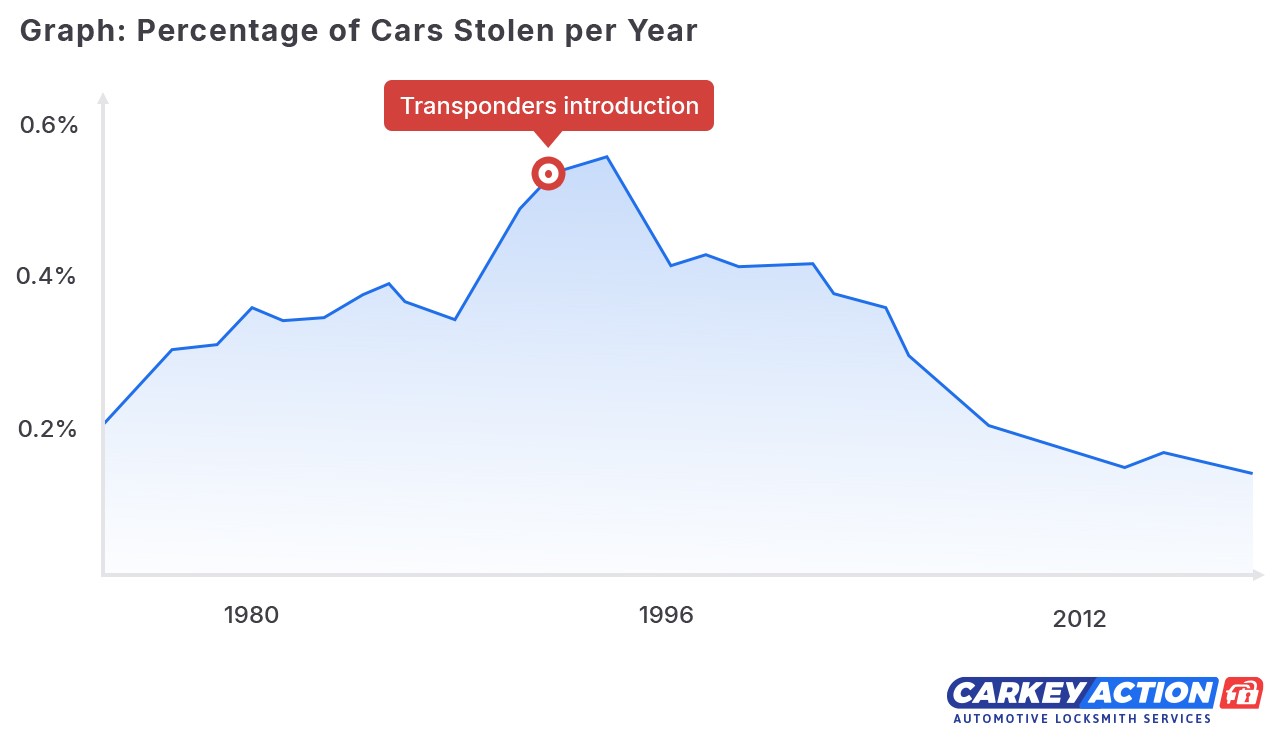
Since the introduction of transponder systems, auto theft rates have dropped by more than 80% worldwide — a massive improvement that shows just how effective this technology is.

Since the introduction of transponder systems, auto theft rates have dropped by more than 80% worldwide — a massive improvement that shows just how effective this technology is.

graph shows decline in car thefts after transponder introduction

Statistics do not lie — car theft has declined dramatically since the introduction of transponders keys.

Notice the sharp decline in theft rates after the 90s — this coincides with the widespread adoption of transponder key technology, which made it significantly harder to steal vehicles.

Notice the sharp decline in theft rates after the 90s — this coincides with the widespread adoption of transponder key technology, which made it significantly harder to steal vehicles.

A Slow but Inevitable Shift to Better Car Security

Initially, transponder technology was implemented only in higher-end luxury models, leaving economy vehicles behind. One of the earliest adopters of transponder keys was Mercedes-Benz, which equipped transponders in certain models as early as 1993!

Initially, transponder technology was implemented only in higher-end luxury models, leaving economy vehicles behind. One of the earliest adopters of transponder keys was Mercedes-Benz, which equipped transponders in certain models as early as 1993!

Not long after, economy vehicles joined the movement. Honda was among them with some of its models — like the Accord, getting transponder keys as early as 1998.

Not long after, economy vehicles joined the movement. Honda was among them with some of its models — like the Accord, getting transponder keys as early as 1998.

As the effectiveness of the technology became clear, other brands started to follow the same path — but not all at the same pace.

As the effectiveness of the technology became clear, other brands started to follow the same path — but not all at the same pace.

Take Ford for example, some of its most popular models like the F-250 and F-350, didn’t have transponder technology until 2008. And the consequences are still visible today. These trucks remain in the list of the most stolen vehicles in Canada! Making them riskier to own, more expensive to insure, and easier for thieves to target. It's a reality that prospective buyers should seriously consider when shopping for used trucks from that time.

Take Ford for example, some of its most popular models like the F-250 and F-350, didn’t have transponder technology until 2008. And the consequences are still visible today. These trucks remain in the list of the most stolen vehicles in Canada! Making them riskier to own, more expensive to insure, and easier for thieves to target. It's a reality that prospective buyers should seriously consider when shopping for used trucks from that time.

As an automotive locksmith I see these vulnerable models regularly — performing theft recovery repairs for the lucky owners whose vehicles were retrieved. Unfortunately, not everyone gets that lucky…

As an automotive locksmith I see these vulnerable models regularly — performing theft recovery repairs for the lucky owners whose vehicles were retrieved. Unfortunately, not everyone gets that lucky…

They year 2008 wasn’t just a coincidence. That year, Transport Canada introduced a mandate under the Canada Motor Vehicle Safety Standard (CMVSS) 114, requiring all new vehicles sold in Canada to be equipped with an immobilizer system.

They year 2008 wasn’t just a coincidence. That year, Transport Canada introduced a mandate under the Canada Motor Vehicle Safety Standard (CMVSS) 114, requiring all new vehicles sold in Canada to be equipped with an immobilizer system.

In section S5.1 – "Theft Protection" it requires that:

  • The starting system prevents engine activation unless the key is present.

  • The key must create a unique combination that enables the starting system.

  • The system must disable steering or self-mobility when the key is removed.

In section S5.1 – "Theft Protection" it requires that:

  • The starting system prevents engine activation unless the key is present.

  • The key must create a unique combination that enables the starting system.

  • The system must disable steering or self-mobility when the key is removed.

This regulation forced even the late sleepy adopters to shift and implement transponder key technology across the board.

This regulation forced even the late sleepy adopters to shift and implement transponder key technology across the board.

Interesting facts about transponder keys

  • Currently, there are +45 different types of transponder types, and new ones are being introduced every year.

  • Transponder technology decreased car theft worldwide by more than 80%.

  • Today, it's a universal technology. ALL of car manufacturers rely on transponders. It is still a very effective technology even today.

Is My Key a Transponder Key?

How to Tell if a Vehicle has a Transponder Anti-Theft System

If you’re wondering whether your car key has a chip inside, here’s the good news — it’s super easy to figure out.

If you’re wondering whether your car key has a chip inside, here’s the good news — it’s super easy to figure out.

First, a quick rule of thumb: If you are living in Canada and your vehicle was manufactured in 2008 or later, it almost certainly has a transponder key. That’s because Canadian Motor Vehicle Safety Standard No. 114 (CMVSS 114) made factory-installed immobilizer systems mandatory for all new vehicles starting in the 2008 model year.

First, a quick rule of thumb: If you are living in Canada and your vehicle was manufactured in 2008 or later, it almost certainly has a transponder key. That’s because Canadian Motor Vehicle Safety Standard No. 114 (CMVSS 114) made factory-installed immobilizer systems mandatory for all new vehicles starting in the 2008 model year.

For US vehicles generally same rule applies.

For US vehicles generally same rule applies.

What About Older Cars?

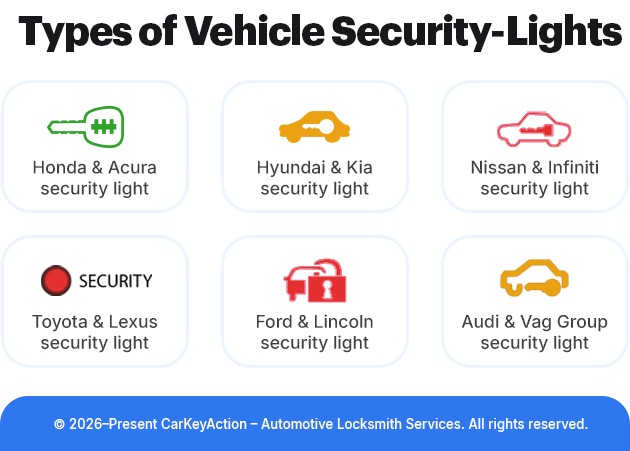
If your car is older than 2008, the easiest way to tell is by checking for a security light on your dashboard. This light usually turns on briefly when you turn the key to the "on" position. It might look like:

If your car is older than 2008, the easiest way to tell is by checking for a security light on your dashboard. This light usually turns on briefly when you turn the key to the "on" position. It might look like:

  • A car with a key icon

  • A padlock symbol

  • A flashing red dot

  • The word “SECURITY”

  • A car with a key icon

  • A padlock symbol

  • A flashing red dot

  • The word “SECURITY”

There’s no universal design, each manufacturer uses their own version. But if you see any security-related icon or light, almost certainly your car uses a transponder key.

There’s no universal design, each manufacturer uses their own version. But if you see any security-related icon or light, almost certainly your car uses a transponder key.

To help you out, we’ve created a visual reference image that shows the most common types of security lights used across different car brands. Keep in mind that some indicators are obvious, while others are more subtle or hidden near the windshield or center console.

To help you out, we’ve created a visual reference image that shows the most common types of security lights used across different car brands. Keep in mind that some indicators are obvious, while others are more subtle or hidden near the windshield or center console.

Visual guide to different security indicator lights used by various car brands

Still Unsure?

If you’re not sure, don’t guess. You can always call your local dealership or an experienced auto locksmith. With your vehicle’s VIN or make/model/year, they can tell you right away if your key has a chip inside or not.

If you’re not sure, don’t guess. You can always call your local dealership or an experienced auto locksmith. With your vehicle’s VIN or make/model/year, they can tell you right away if your key has a chip inside or not.

A Guide to All Transponder Car Keys Types
The transponder key started out as just a basic car key with a small chip hidden inside. The chip sent a "password" to the vehicle, and that was enough to start the engine.

The transponder key started out as just a basic car key with a small chip hidden inside. The chip sent a "password" to the vehicle, and that was enough to start the engine.

Manufacturers didn’t stop there. As car technology advanced, they began integrating transponders with new features — not necessary just for theft prevention, but also to make everyday car use easier and more convenient for drivers.

Manufacturers didn’t stop there. As car technology advanced, they began integrating transponders with new features — not necessary just for theft prevention, but also to make everyday car use easier and more convenient for drivers.

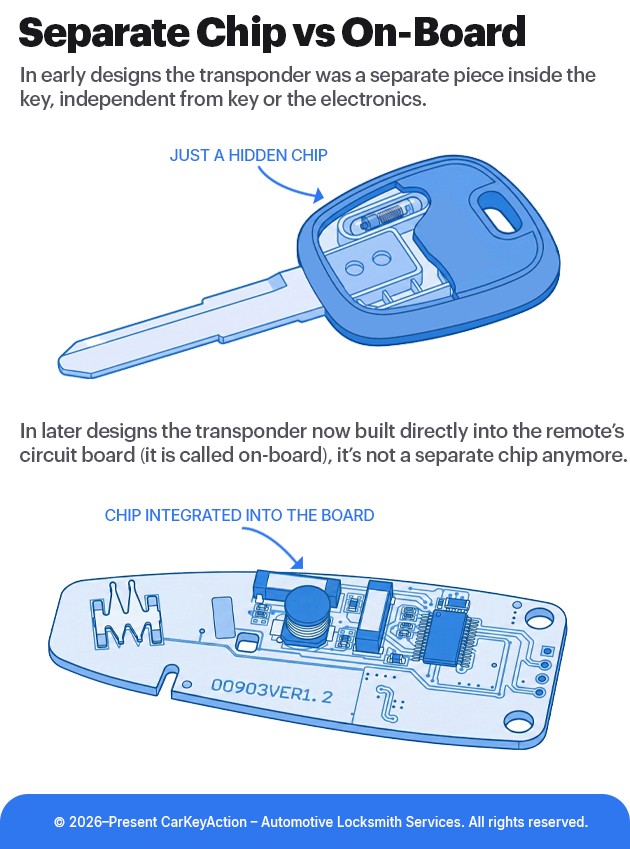
Remote keys got introduced. Lock and unlock functions were quickly integrated into our car keys. At first, the transponder chip remained a separate component — meaning the remote and the key were two separate pieces.

Remote keys got introduced. Lock and unlock functions were quickly integrated into our car keys. At first, the transponder chip remained a separate component — meaning the remote and the key were two separate pieces.

But as convenience kept evolving, manufacturers began fully integrating the transponder chip directly onto the remote’s circuit board. This made keys more compact and convenient — but with one small downside: if the remote electronics fail, so does the transponder, and the car won’t start.

But as convenience kept evolving, manufacturers began fully integrating the transponder chip directly onto the remote’s circuit board. This made keys more compact and convenient — but with one small downside: if the remote electronics fail, so does the transponder, and the car won’t start.

Illustration comparing car keys with a separate transponder chip and an on-board transponder integrated into the circuit board

Later came proximity keys and push-to-start systems. These use more advanced chips that communicate with the vehicle within a short-range. A signal “bubble” around the key, if the car detects the "bubble" it means the key is near the car, the ECU authorizes to start the car. Not like the old transponders that had to be very close to the antenna to be powered.

Later came proximity keys and push-to-start systems. These use more advanced chips that communicate with the vehicle within a short-range. A signal “bubble” around the key, if the car detects the "bubble" it means the key is near the car, the ECU authorizes to start the car. Not like the old transponders that had to be very close to the antenna to be powered.

The reach of that signal was increased so you could unlock your car by touching the door handle and start it with the push of a button, all without taking the key out of your pocket. Pretty neat feature.

The reach of that signal was increased so you could unlock your car by touching the door handle and start it with the push of a button, all without taking the key out of your pocket. Pretty neat feature.

And despite all the evolution, one thing remains the same: all modern car keys, even the most advanced — still rely on a transponder technology at their core.

And despite all the evolution, one thing remains the same: all modern car keys, even the most advanced — still rely on a transponder technology at their core.

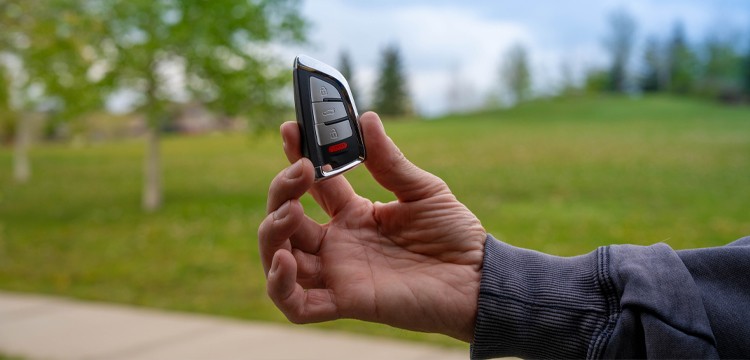
person holding proximity key

A person holding a BMW proximity car key

A person holding a BMW proximity car key

Transponder Car Key Types Explained

transponder key
transponder key

1. Regular Transponder Key

(Standard Cut / Laser Cut / Tibbe Key)

(Standard Cut / Laser Cut / Tibbe Key)

This is the most classic type of transponder key. The one we discussed at the beginning of this article where the plastic head houses the chip.

This is the most classic type of transponder key. The one we discussed at the beginning of this article where the plastic head houses the chip.

But not all regular transponder keys have the same blade or cut the same way! There are:

But not all regular transponder keys have the same blade or cut the same way! There are:

  • Standard Cut Keys: Like a traditional house key, could be single or double sided.

  • Laser Cut (Sidewinder) Keys: Thicker and cut usually down the center, the difference is that laser cut keys are traced and cut with a special high-security machine with a special cutter unlike the standard traditional keys that cut with a side milling cutter instead.

  • Tibbe Cut Keys: Special design used mostly in older Jaguars and some Ford models, a special jaw could be bought as an add-on on newer machines to cut such keys.

  • Standard Cut Keys: Like a traditional house key, could be single or double sided.

  • Laser Cut (Sidewinder) Keys: Thicker and cut usually down the center, the difference is that laser cut keys are traced and cut with a special high-security machine with a special cutter unlike the standard traditional keys that cut with a side milling cutter instead.

  • Tibbe Cut Keys: Special design used mostly in older Jaguars and some Ford models, a special jaw could be bought as an add-on on newer machines to cut such keys.

Regardless of the cut, the chip is always embedded in the head. And they all can be considered your standard transponder key 🔑.

Regardless of the cut, the chip is always embedded in the head. And they all can be considered your standard transponder key 🔑.

remote head key
remote head key

2. Remote Head Key

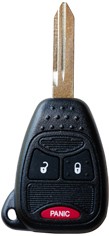
This type combines a key blade with built-in remote buttons (lock/unlock, trunk, panic).

This type combines a key blade with built-in remote buttons (lock/unlock, trunk, panic).

In the locksmith world, we usually call these remote keys to be more precise about what we’re working on.

In the locksmith world, we usually call these remote keys to be more precise about what we’re working on.

While it’s obvious the key has a transponder chip (and technically is a transponder key), calling it just a chip key would be confusing — that term is typically reserved for standard keys without any remote functions.

While it’s obvious the key has a transponder chip (and technically is a transponder key), calling it just a chip key would be confusing — that term is typically reserved for standard keys without any remote functions.

So in practice, we use remote key to describe transponder keys that also incorporate remote features.

So in practice, we use remote key to describe transponder keys that also incorporate remote features.

remote flip key
remote flip key

3. Remote Flip Key

Very similar to a remote head key — but with a key difference: a folding blade design. The key blade flips out when you press a button (it's spring loaded), keeping it safely tucked away when not in use. Safer for your pockets, harder to damage accidentally, small, and compact.

Very similar to a remote head key — but with a key difference: a folding blade design. The key blade flips out when you press a button (it's spring loaded), keeping it safely tucked away when not in use. Safer for your pockets, harder to damage accidentally, small, and compact.

And another bonus with this key style is that if the blade is worn out it can be changed. Saving you on replacing the entire car key.

And another bonus with this key style is that if the blade is worn out it can be changed. Saving you on replacing the entire car key.

proximity key
proximity key

4. Proximity Key

(Smart Key / Smart Card)

(Smart Key / Smart Card)

Modern and more convenient, proximity keys allow keyless entry and push start button. Usually you don’t even have to insert anything — just keep the key on you and walk up to your car, doors will open automatically and if you get inside just press the button and voilà! the car starts.

Modern and more convenient, proximity keys allow keyless entry and push start button. Usually you don’t even have to insert anything — just keep the key on you and walk up to your car, doors will open automatically and if you get inside just press the button and voilà! the car starts.

Today you’ll mostly find them on every new vehicle, but before that this technology was reserved only for luxury segments. Proximity keys now come in all shapes — from classic remote-style keys to sleek, futuristic designs that resemble a credit card.

Today you’ll mostly find them on every new vehicle, but before that this technology was reserved only for luxury segments. Proximity keys now come in all shapes — from classic remote-style keys to sleek, futuristic designs that resemble a credit card.

fobik key
fobik key

5. FOBIK Key

Used mostly in Chrysler, Dodge, Jeep, Mercedes vehicles (and Infiniti, just one model. Don't ask 🤷‍♂️), FOBIK stands for Frequency Operated Button Integrated Key.

Used mostly in Chrysler, Dodge, Jeep, Mercedes vehicles (and Infiniti, just one model. Don't ask 🤷‍♂️), FOBIK stands for Frequency Operated Button Integrated Key.

It looks like an egg shaped remote with no visible blade. For Chrysler vehicles it communicates with a module in the vehicle called WIN (Wireless Ignition Node), Mercedes calls their module EIS (Electronic Ignition Switch) a different name but the same idea.

How Do I Get a Transponder Car Key Duplicated?

Before transponders existed, copying a car key was a simple task: a right blank and a quick cut on a key machine and you were ready to drive.

Before transponders existed, copying a car key was a simple task: a right blank and a quick cut on a key machine and you were ready to drive.

Modern transponder keys can’t simply be cut and used — they also need to be programmed. Programming car keys is the process of “marrying” the chip inside your new key to your vehicle’s immobilizer system. Without this step, even a perfectly cut key won’t start your car — the car simply won’t recognize the new key.

Modern transponder keys can’t simply be cut and used — they also need to be programmed. Programming car keys is the process of “marrying” the chip inside your new key to your vehicle’s immobilizer system. Without this step, even a perfectly cut key won’t start your car — the car simply won’t recognize the new key.

This programming process tells your car: “Hey, this is a valid key — allow it to start the engine.” Once programmed, the key and vehicle are synced. Only then will the car respond to that key’s transponder signal.

This programming process tells your car: “Hey, this is a valid key — allow it to start the engine.” Once programmed, the key and vehicle are synced. Only then will the car respond to that key’s transponder signal.

Vehicle dashboard display showing “Key Program Successful” message

Vehicle dashboard display showing “Key Program Successful” message

Vehicle dashboard display showing “Key Program Successful” message

Who Can Make a Copy and Program the Key?

If you've lost all car keys or just need a spare, your first instinct might be to call the dealership. But here’s the thing and what many people don't know — you’re likely overpaying for a service you could have done elsewhere.

If you've lost all car keys or just need a spare, your first instinct might be to call the dealership. But here’s the thing and what many people don't know — you’re likely overpaying for a service you could have done elsewhere.

Most people don’t know that professional automotive locksmiths use the same high-end equipment as dealerships to program and cut transponder keys, remotes, and even proximity (push-to-start) keys. In fact, a qualified auto locksmith can often provide the same service faster and much more affordable 💵 — all without compromising on quality.

Most people don’t know that professional automotive locksmiths use the same high-end equipment as dealerships to program and cut transponder keys, remotes, and even proximity (push-to-start) keys. In fact, a qualified auto locksmith can often provide the same service faster and much more affordable 💵 — all without compromising on quality.

✅ Your local automotive locksmiths are fully capable of programming and cutting keys for nearly every make and model — from older vehicles to luxury brands.

So, What’s the Cost?

Price usually depends on the complexity of your anti-theft system. To make this section more useful I'll share with you price ranges, so you’ll know at least what this type of service typically costs. By the end you'll have enough information to judge whether what you’re being charged is fair or not.

Price usually depends on the complexity of your anti-theft system. To make this section more useful I'll share with you price ranges, so you’ll know at least what this type of service typically costs. By the end you'll have enough information to judge whether what you’re being charged is fair or not.

  • Regular transponder keys (standard chip keys) typically range from $70 to $220, including cutting and programming.

  • Remote keys (flip or head) typically range from $180 to $280, cutting and programming included.

  • Advanced proximity keys (push-to-start remotes, smart fobs/cards) are more involved, and can range from $250 to $400, especially for high-end or luxury vehicles.

  • Regular transponder keys (standard chip keys) typically range from $70 to $220, including cutting and programming.

  • Remote keys (flip or head) typically range from $180 to $280, cutting and programming included.

  • Advanced proximity keys (push-to-start remotes, smart fobs/cards) are more involved, and can range from $250 to $400, especially for high-end or luxury vehicles.

Before heading to your dealership, check with your local locksmith first. See what he can offer, you might be surprised by how much money you would save — and the service is often more personal and flexible.

Before heading to your dealership, check with your local locksmith first. See what he can offer, you might be surprised by how much money you would save — and the service is often more personal and flexible.

"Why can’t you just tell me the exact price?"

Good question, and it’s a fair one.

Listing every brand and model price here would defeat the purpose of this article. My idea here is to give you the tools to judge for yourself if what you've been quoted is fair or not.

And frankly even if I wanted to list it all, there are simply too many variables involved — which I'll touch on right now.
What Variables Effect Transponder Key Cloning Price

What Variables Effect Transponder Key Cloning Price

There’s a lot going on behind what seems like a simple process. It’s not always a matter of "cut the key press a button and done." Depending on your vehicle and situation, the process can range from a quick in-and-out job to a highly technical one that requires specialized tools, software, and even taking electronics out of the car.

There’s a lot going on behind what seems like a simple process. It’s not always a matter of "cut the key press a button and done." Depending on your vehicle and situation, the process can range from a quick in-and-out job to a highly technical one that requires specialized tools, software, and even taking electronics out of the car.

Here’s just a taste of what can affect the price:

Here’s just a taste of what can affect the price:

🔐 Are we making a copy or did you lose all keys?
A copy can be fairly straightforward, but if you lost all keys? It's a different story. The process will require much more labor time. Why? Because we don't know how to cut a key (no reference), and we don't have a working key to clone from (need to reset the immobilizer system).

🔐 Are we making a copy or did you lose all keys?
A copy can be fairly straightforward, but if you lost all keys? It's a different story. The process will require much more labor time. Why? Because we don't know how to cut a key (no reference), and we don't have a working key to clone from (need to reset the immobilizer system).

🔐 Does the vehicle require a paid third-party code, PIN, or software?
Sometimes we have to buy access codes or PIN codes from the manufacturer or trusted third parties. And sometimes special software must be bought just to program a specific model — it all adds up.

🔐 Does the vehicle require a paid third-party code, PIN, or software?
Sometimes we have to buy access codes or PIN codes from the manufacturer or trusted third parties. And sometimes special software must be bought just to program a specific model — it all adds up.

🔐 How difficult is it to program the key to your car?
Some cars are easy peasy. Others require expensive equipment (we’re talking $5k+ programmers with yearly subscriptions), and advanced procedures.

🔐 How difficult is it to program the key to your car?
Some cars are easy peasy. Others require expensive equipment (we’re talking $5k+ programmers with yearly subscriptions), and advanced procedures.

🔐 Does your car require to physically extract modules to read password
Yes — some vehicles can’t be programmed through the OBD port (you can’t just plug in a programmer and press a few buttons). On certain cars, we have to physically remove modules from the car, open them up, solder directly to a chip, extract data, and write new data. It’s extremely technical, and definitely not a simple process.

🔐 Does your car require to physically extract modules to read password
Yes — some vehicles can’t be programmed through the OBD port (you can’t just plug in a programmer and press a few buttons). On certain cars, we have to physically remove modules from the car, open them up, solder directly to a chip, extract data, and write new data. It’s extremely technical, and definitely not a simple process.

🔐 Is the transponder chip cloneable?
If your chip is cloneable — great, the process is usually simple and quick. If it’s not, programming a new key often becomes nearly as complex as dealing with an "all keys lost" situation — requiring full system programming and more advanced steps. Bottom line: having a working key helps, but not always guarantees an easy job.

🔐 Is the transponder chip cloneable?
If your chip is cloneable — great, the process is usually simple and quick. If it’s not, programming a new key often becomes nearly as complex as dealing with an "all keys lost" situation — requiring full system programming and more advanced steps. Bottom line: having a working key helps, but not always guarantees an easy job.

🔐 Time of day and urgency?
Emergency? After hours? Holiday? That naturally affects pricing.

🔐 Time of day and urgency?
Emergency? After hours? Holiday? That naturally affects pricing.

🔐 Mobile service or at the shop?
If a technician is sent out to your location, there’s an extra service call fee. If you bring the vehicle to the shop, it will cost less.

🔐 Mobile service or at the shop?
If a technician is sent out to your location, there’s an extra service call fee. If you bring the vehicle to the shop, it will cost less.

You see? There’s actually quite a bit involved behind the scenes. It’s not always as straightforward as it might seem — and that’s why giving an exact price without knowing the car and situation would be wrong.

You see? There’s actually quite a bit involved behind the scenes. It’s not always as straightforward as it might seem — and that’s why giving an exact price without knowing the car and situation would be wrong.

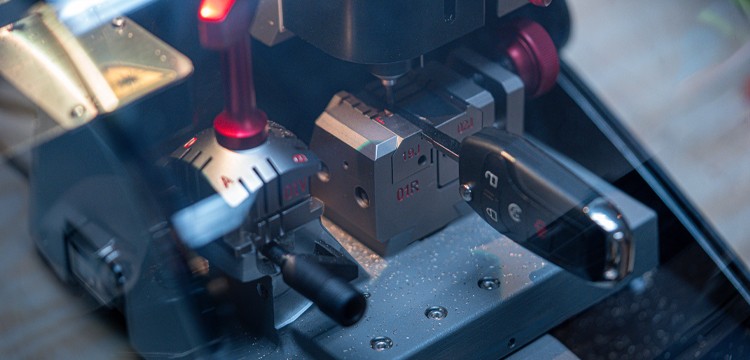
Automotive locksmith machine duplicating a transponder car key

Automotive locksmith machine duplicating a transponder car key

Automotive locksmith machine duplicating a transponder car key

What to Do When You Need a Car Key Duplicate

If you choose to go through your dealership — it’s simple: just call, book an appointment, and they’ll handle the rest (at a premium price, of course).

If you choose to go through your dealership — it’s simple: just call, book an appointment, and they’ll handle the rest (at a premium price, of course).

But if you want to save money and go with a local auto locksmith, here’s what you need to do to make the process smooth and hassle-free:

But if you want to save money and go with a local auto locksmith, here’s what you need to do to make the process smooth and hassle-free:

1️⃣ Get Your Vehicle Information Ready
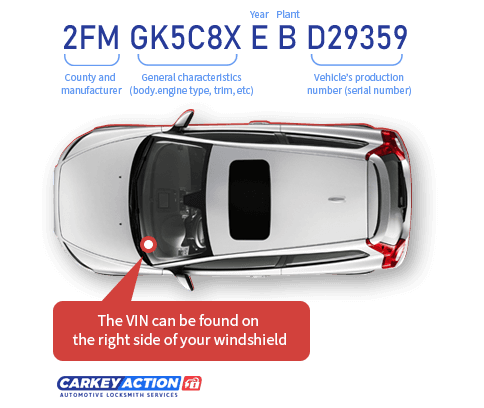
Before you contact a car key specialist, gather a few details about your vehicle. You’ll need:

Before you contact a car key specialist, gather a few details about your vehicle. You’ll need:

  • VIN (Vehicle Identification Number)

  • Make and model

  • Year of production

  • Vehicle trim/options (if known)

  • VIN (Vehicle Identification Number)

  • Make and model

  • Year of production

  • Vehicle trim/options (if known)

Photo showing where to find your car’s VIN and how to decode its meaning

Having this information ready helps the locksmith quickly identify the right key type for your vehicle — saving time and preventing costly mistakes.

Having this information ready helps the locksmith quickly identify the right key type for your vehicle — saving time and preventing costly mistakes.

If you’ve lost all your keys, locksmiths are legally required to verify proof of ownership before creating a new key. Be ready to provide: A Photo ID and vehicle registration or equivalent.

2️⃣ Call an Automotive Locksmith

Once you’ve gathered your vehicle info, call your local automotive locksmith. Many offer mobile service — meaning they can come to your location. This is especially helpful if you’ve lost all keys and can’t drive the vehicle.

Once you’ve gathered your vehicle info, call your local automotive locksmith. Many offer mobile service — meaning they can come to your location. This is especially helpful if you’ve lost all keys and can’t drive the vehicle.

Here’s what typically happens:

Here’s what typically happens:

✅ If you have an existing key, the locksmith can decode it and make a new key on the spot.
✅ If you’ve lost all keys, they will decode one of your vehicle’s locks (door, ignition, or trunk) and cut a proper key.
✅ Then they will pick the right transponder chip for your car.
✅ Finally, they will cut the new key and program the transponder chip so it’s fully paired to your vehicle.

✅ If you have an existing key, the locksmith can decode it and make a new key on the spot.
✅ If you’ve lost all keys, they will decode one of your vehicle’s locks (door, ignition, or trunk) and cut a proper key.
✅ Then they will pick the right transponder chip for your car.
✅ Finally, they will cut the new key and program the transponder chip so it’s fully paired to your vehicle.

3️⃣ Always Get an Invoice

Once the job is complete, make sure you receive a proper invoice with your new key or key fob.

Once the job is complete, make sure you receive a proper invoice with your new key or key fob.

Why? A reputable locksmith will stand behind their work and should offer a warranty of up to 2 years on new keys or fobs. Having an invoice ensures you can claim warranty service if needed.

Why? A reputable locksmith will stand behind their work and should offer a warranty of up to 2 years on new keys or fobs. Having an invoice ensures you can claim warranty service if needed.

Can I Program a Transponder Key by Myself?

Well, you might ask: “Paul, why can’t I just do it myself? How hard can it be?”
And I’d say — you can absolutely try! and I encourage you, but your success rate heavily depends on your immobilizer system, and on the tools you've got.

Here’s the deal:

👉 Programming a new transponder key can be a DIY project — but only if you already have a working key (or in some cases, two keys). It can done with the help of "On-Board Programming".

👉And if you’ve lost all your keys: forget it… — you’ll need an auto locksmith with pro-level tools.
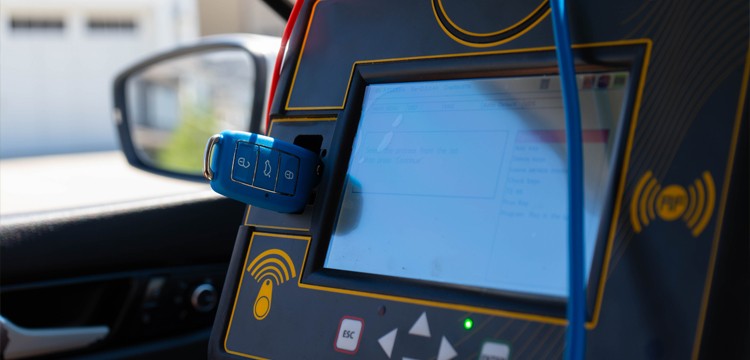
car key programmer

So What Is On-Board Programming?

Some vehicles support something called On-Board Programming (OBP). That means you can follow a set of steps inside your car, with your working key(s) and the new (already cut) blank key — and program the new car key yourself. No fancy tools required.

The downside? Not all cars support OBP for both the chip key and the remote. Some allow OBP for both, some allow remotes only, some won't have OBP at all. So make sure you check which applies to your car first.

To give you an idea:

  • GM group cars (Chevy, GMC, Buick, and other GM “stuff”) — many models allow OBP with just one key.

  • Ford vehicles — OBP works too, but most models require two keys to complete the process.

  • BMW, Honda, Nissan, Toyota vehicles — OBP works for remote portion only.

Don't Forget to Cut The Key First!

Even if you CAN program the car key yourself, your blank key still needs to be cut. So you’ll still need to visit an auto locksmith to cut the blade (you can’t skip this step — no cut key = no programming).

When Should You Just Call a Locksmith?

If your car doesn’t support OBP, you’ll need a professional car key programmer — and this is where I’d say: 👉 Save yourself the headache and go to an automotive locksmith.

Why? Because I’ve seen plenty of people try cheap programmers or follow bad YouTube advice. It usually ends up pretty bad, you don't want to be stuck in a situation where all car keys erased, leaving the vehicle immobilized. Trust me — you don’t want that.

But If You’re Determined…

But if you still want to give it a shot, your best DIY-friendly option is the CK100 — it’s the only programmer in the ~$100 range that actually does something useful.

Most other cheap tools you’ll see online available for the general public are junk — they either do nothing or can seriously mess up your car’s electronics. The CK100, on the other hand, is a little gem: it works on many older models (Hondas, Toyotas, Fords, GMs, and more) and some newer vehicles. It is well-documented, and even some professional locksmiths keep one in their vans for just in case situations.

One important thing: the CK100 won’t handle newer vehicles — there’s no magical $100-200ish programmer for that. If your car requires a modern tool, the cost jumps so high that it no longer makes sense — you’d often be better off going to the dealership, even with their premium pricing.

If you will try CK100 know that:

  • It won’t cover brand new cars.

  • You still need to cut the key first.

  • You need to know the exact programming procedure for your car.

And finally — be careful. Always verify that the programmer you use actually supports your specific car before you start pressing buttons.

Good luck! 😃

Frequently Asked Questions About Transponder Keys

So I've checked what people asked on Google about transponder keys — and these questions came up the most. I've answered them for you.

So I've checked what people asked on Google about transponder keys — and these questions came up the most. I've answered them for you.

Can I start my car without a transponder key?

Can I start my car without a transponder key?

Can I bypass my transponder key?

Can I bypass my transponder key?

Will a non-transponder key unlock my car?

Will a non-transponder key unlock my car?

Can you replace a transponder key without the original?

Can you replace a transponder key without the original?

What happens when transponder fails?

What happens when transponder fails?

Full Summary: TL;DR 🔥

In short, a transponder key is an automotive key that contains a microchip that can store and transmit data. Car manufacturers use it to store a unique "password" of a vehicle. It sends this "password" every time the ignition cylinder is turned on.

In short, a transponder key is an automotive key that contains a microchip that can store and transmit data. Car manufacturers use it to store a unique "password" of a vehicle. It sends this "password" every time the ignition cylinder is turned on.

The chip is a "sleeping computer." It powers up only when the ignition is turned on. The chip transmits the code, which is verified by the car — if correct, the car starts.

The chip is a "sleeping computer." It powers up only when the ignition is turned on. The chip transmits the code, which is verified by the car — if correct, the car starts.

Since 2008, all new vehicles in Canada (per CMVSS 114 regulation) must be equipped with immobilizers — transponder technology helped reduce car theft worldwide by over 80%.

Since 2008, all new vehicles in Canada (per CMVSS 114 regulation) must be equipped with immobilizers — transponder technology helped reduce car theft worldwide by over 80%.

All modern car keys, even advanced ones — still rely on transponder tech.

All modern car keys, even advanced ones — still rely on transponder tech.

Different Shapes Sizes and Encryptions

Not all transponder chips are the same. You can’t reliably tell by the eye — they might look the same but have different encryption algorithms. The most reliable way to identify a transponder chip is with a chip reader.

Not all transponder chips are the same. You can’t reliably tell by the eye — they might look the same but have different encryption algorithms. The most reliable way to identify a transponder chip is with a chip reader.

Is My Key a Transponder Key?

If your car is 2008 or newer? Certainly yes. For older cars — check for a security light on the dashboard, or call the official dealer or a locksmith.

What's Needed to Duplicate?

Programming the new key to your vehicle is needed. If you want to do it yourself you can try On-Board Programming (if your car supports it), but remember that you still need to cut the key. If OBP isn’t supported — a professional car key programmer is required, usually best to call a professional auto locksmith.

How Much?

Dealers usually are pricy — an automotive locksmith is faster and cheaper. No compromises on quality.

Typical prices:

  • Regular chip key: ~$70–$220

  • Remote key: ~$180–$280

  • Proximity key: ~$250–$400

Exact price depends on many variables — car brand, model, key type, time, and programming difficulty.

DIY?

If determined — use a CK100 programmer. It's the only ~$100-range programmer worth trying. It won’t cover newer cars (older models only). You still must cut the key first, and know your vehicle’s exact programming procedure.

For newer vehicles — skip DIY. Pro tools cost thousands, and the process gets too complex fast. You’re better off going to a professional locksmith.
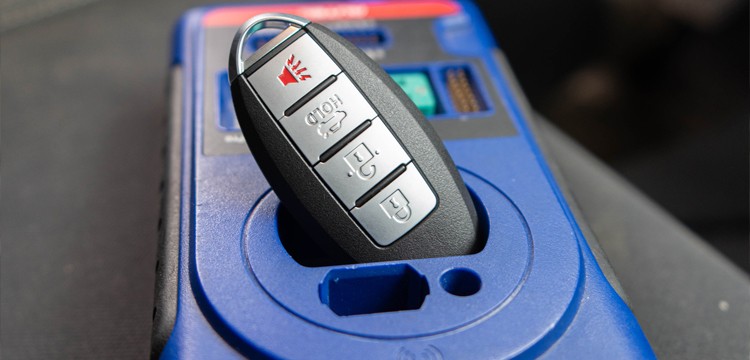
car key inside a programmer

Do You Need Your Transponder Key Duplicated in Calgary?

Located in Calgary and need new transponder key cut and programmed? At CarKeyAction™, we specialize in cutting and programming transponder keys for all types of vehicles in Calgary — from standard chip keys to the latest proximity smart keys. We do it all!

We stay on top of the latest automotive security trends and use advanced tools to handle even the most modern key systems — at a lower price than your local dealership.

We’d be happy to help. Call us today at 📞(403) 589-8978 or fill our online form and book your appointment.

Calgary’s top car locksmith just a click away

Calgary’s top car locksmith just a click away

Calgary’s top car locksmith just a click away

Ready To Book An Appointment?

Ready To Book An Appointment?

Detailed close-up of a Mazda headlight with surrounding body panels visible